
Why Familiarity Is the Hidden Key to Presence on Stage
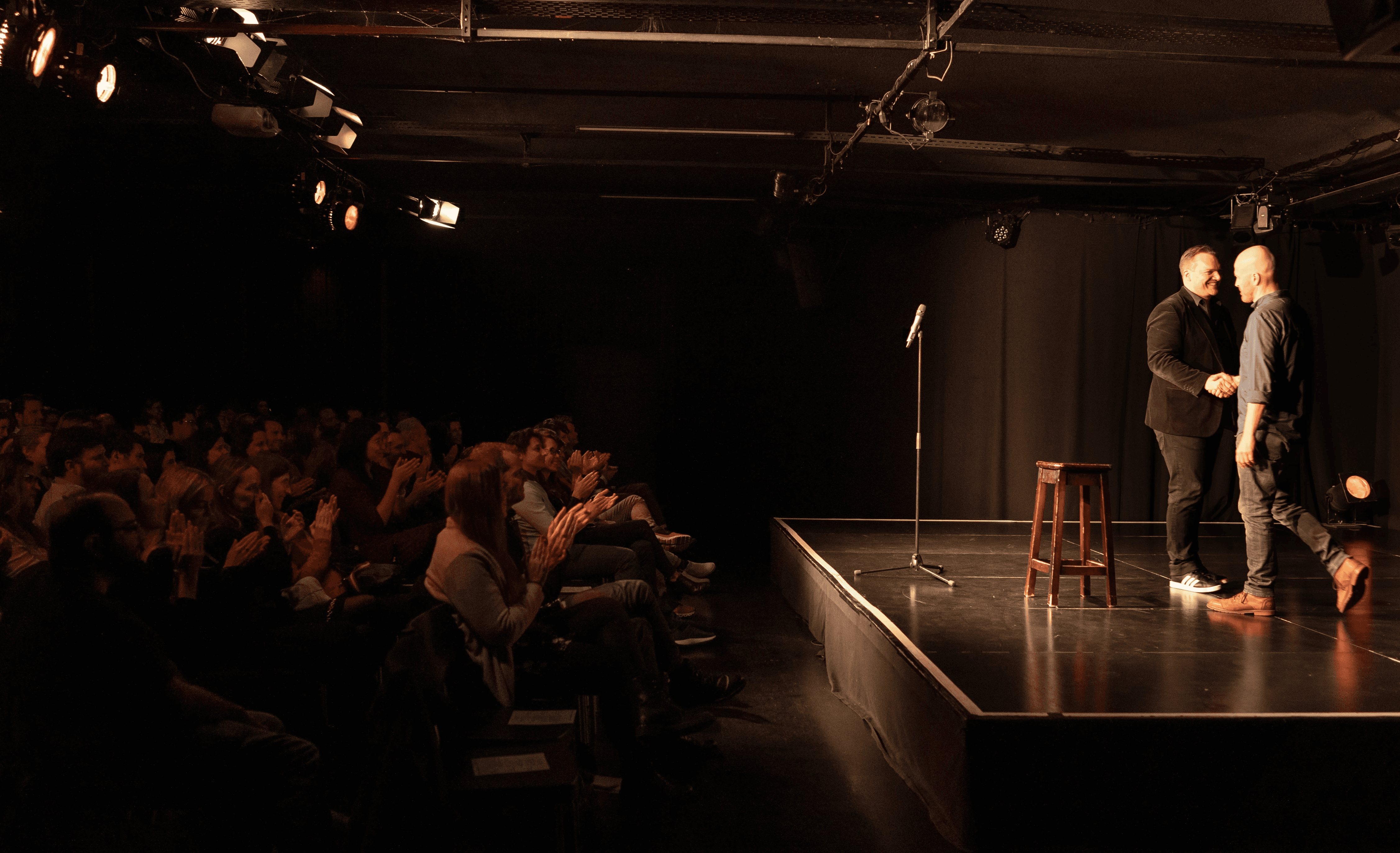
Public speaking is one of the most unnatural activities in the world. Most people spend almost none of their time performing in front of an audience. Even professional performers do not do it that often
Take an actor doing a solo show, arguably one of the most exposed forms of performance. They do not perform every night, and when they do, it is usually for about 90 minutes, six percent of their time. Register that for a moment. A professional performer is expected to deliver something exceptional in an activity they only do a tiny fraction of their life.
For most people, public speaking is even rarer.
Why unfamiliarity breaks presence
What exactly is unfamiliar in public speaking? First, speaking to an audience itself. Second, the room: the space where you speak is almost never the place where you work or prepare. You do not control it and most of the time, you did not even choose it. Most business speakers talk in hotel conference rooms or rented venues they have never seen before.
Instead of being fully present with your message and your audience, part of your attention is occupied by the environment. You are discovering the room while trying to speak. Your brain is asking questions about the space, the layout, the equipment. As a result, your presence suffers.
Professional performers solve this through repetition. They rehearse again and again, often in the very space where they will perform. When they do not have access to that space, they still rehearse elsewhere and adapt later.
As a business speaker, you usually do not have that luxury but you can have a similar strategy.
How to manufacture familiarity on your own
You need a simple setup that allows your body to recognize the speaking situation before the actual event.
Find a room where you can rehearse undisturbed and where you are not afraid of looking awkward. Choose a place that represents your entry into the space, symbolizing the transition from backstage to stage. Then choose another place where you will actually speak. This is your position of power.
The position of power can move during your talk if you decide to make deliberate movements. What matters is that every time you speak, you are clearly standing in it.
Rehearse with all physical elements that you anticipate having, like using a clicker or tapping on keyboard to go through slides, manipulating props.
This setup creates familiarity with the situation, not just the words.
Familiarity creates confidence
On the day of your talk, arrive early. Ask where you will enter and decide where your position of power will be. Double check the technical aspects.
Since you rehearsed with the essential elements in mind, familiarity allows confidence to emerge naturally. When your body recognizes the situation, it relaxes and you are free to be present with your audience and deliver your message with clarity and authority.
AUTHOR
BENJAMIN DELAHAYE
A former corporate leader turned stand-up comedian, Benjamin spent over 20 years in multinational companies across sales, marketing, finance, and operations, navigating boardrooms and high-stakes presentations. Along the way, he discovered his unexpected superpower: he not only mastered the very things most people dread, he learned to crave them. Public speaking, selling: all became sources of energy, not anxiety.

Keynote speaking training for individuals
Reach next level and become the speaker you crave to be.
See Programs
Public Speaking Coaching for Companies
Empower teams with playful, practical communication training.
See Programs
Want to speak to someone?
Book a Call