
How to Look Confident During Public Speaking (Even When You Feel Nervous)
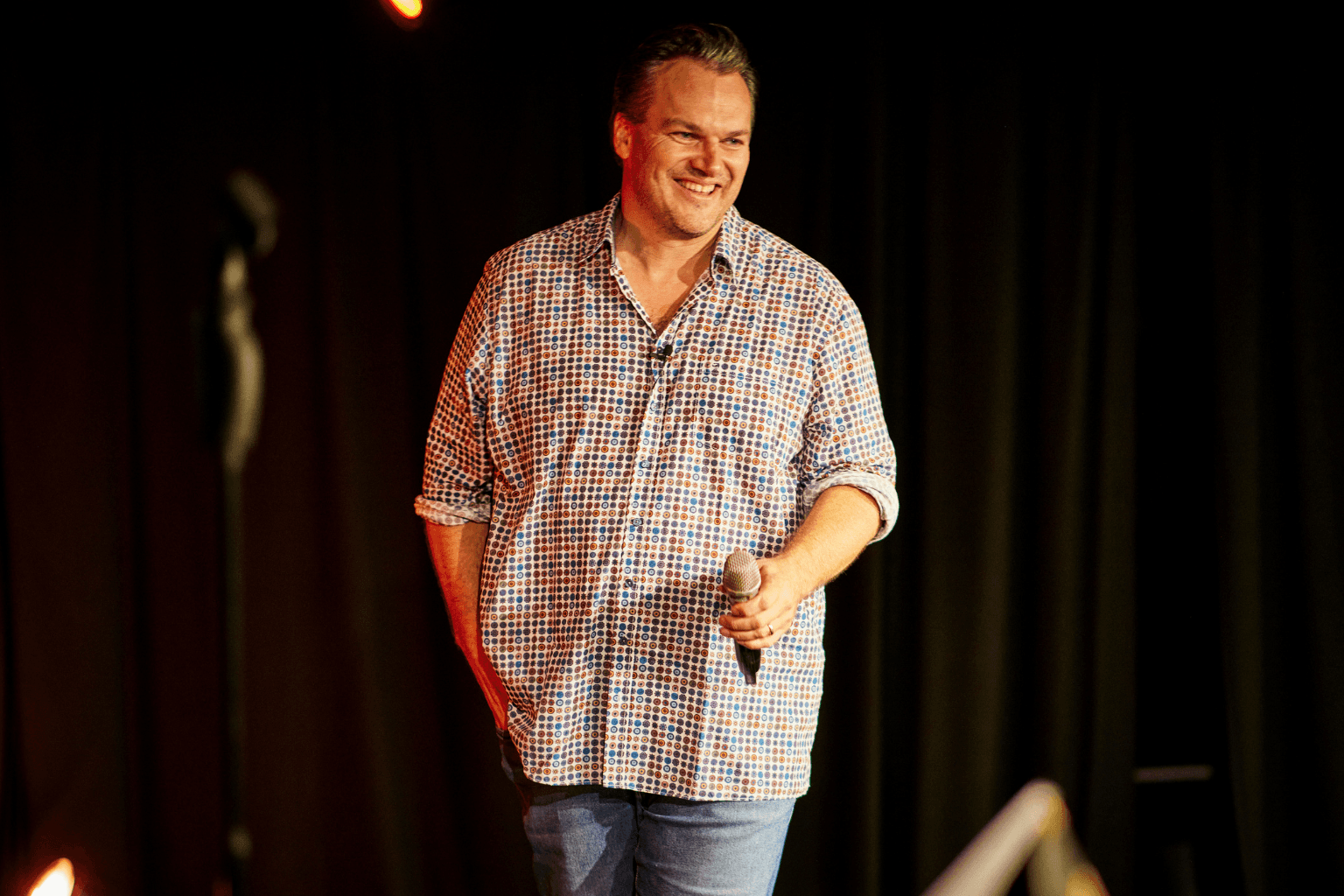
If you want to appear confident on stage, let me start with some good news: in public speaking, it is enough to appear confident.
Your audience cannot see inside your head. They do not know that fear might be racing through your mind. They are not asking themselves whether you are confident or afraid. What they are asking themselves instead is something much simpler:
Is this person in charge?
Do they seem to know where they are going?
Should I follow them?
This judgment happens quickly and often unconsciously. If you appear unsure, many people mentally check out. Some may even feel irritated that their time is being wasted.
But here is the encouraging part. Your audience does not measure confidence by reading your thoughts. They infer it from what they see: a human body moving, standing, pausing, and speaking.
Confidence on stage is mostly physical. And that means it can be trained.
Your body needs simple instructions
When you step on stage, something strange happens. Your brain temporarily loses part of its processing power. Stress narrows your focus and reduces your ability to think about complex things.
In that moment, you are not a sophisticated strategist. You are closer to a slightly confused animal. So your body needs simple instructions.
The easiest thing to control under pressure is the first 30 seconds of your talk: how you enter, where you stand, and the first sentence you say.
If those first moments go according to plan, your body relaxes, the audience tunes in, and the rest of the talk becomes easier.
To learn how to prepare those first moments, read How to Grab an Audience’s Attention in 30 Seconds and Hold It.
Your body runs on oxygen
Fear triggers another instinctive reaction: shallow breathing. Your body prepares to fight or flee, which reduces oxygen flow to the brain. This is one of the main reasons speakers experience brain freeze or lose their train of thought.
Breathing is not just a relaxation technique. It is literally the fuel for speaking.
Every idea you deliver rides on a breath. If you structure your speech with breathing in mind, you maintain oxygen flow and clarity of thought. There is even a practical way to format spoken text so breathing becomes visible and natural.
To learn how to structure speech around breath, read How real performers actually use their breath.
Your body learns through repetition
Animals learn through repetition, not intellectual explanation. Your body works the same way.
Professional performers rehearse their movements again and again: entering the stage, standing in position, delivering lines, handling objects. Your body cannot memorize a script the way your brain does. But it remembers movements, rhythms, and sensations.
During rehearsal, your body learns what it feels like to step on stage and speak. That familiarity makes the real moment much easier.
To learn how to create this familiarity in your preparation, read Why Familiarity Is the Hidden Key to Presence on Stage.
Silence gives you authority
Many inexperienced speakers are afraid of silence. The moment there is a gap, they rush to fill it with words, movement, or filler sounds. But authority often looks like the opposite.
Think about the difference between a barking chihuahua and a predator that moves slowly and deliberately. When it comes to commanding attention, calm and controlled always wins.
Pauses signal confidence. They allow the audience to absorb what you say and create the impression that your words carry weight.
To learn how to use silence as a tool, read Why Silence Is One of the Most Powerful Tools in Public Speaking.
Train your body to perform anyway
Even experienced performers feel fear before stepping on stage. Sweating, trembling, or a racing heart are normal biological reactions.
The goal is not to eliminate them. The goal is to train your body to perform despite them.
Through rehearsal, just like a circus animal, you teach your body a sequence: step onto the stage, walk to your speaking position, begin the message. When the real moment arrives, your body follows that sequence automatically, even if fear is present.
To learn how to train this response, read What To Do When Your Body Betrays You During Public Speaking.
The body is the secret key to look confident
Public speaking is not just a mental activity. It is a physical one. You are not simply a brain delivering ideas. You are a body moving, breathing, pausing, and occupying space in front of other humans.
When your body appears prepared and in control, your audience assumes you are confident. And once they believe that, they are ready to follow your message.
AUTHOR
BENJAMIN DELAHAYE
A former corporate leader turned stand-up comedian, Benjamin spent over 20 years in multinational companies across sales, marketing, finance, and operations, navigating boardrooms and high-stakes presentations. Along the way, he discovered his unexpected superpower: he not only mastered the very things most people dread, he learned to crave them. Public speaking, selling: all became sources of energy, not anxiety.

Keynote speaking training for individuals
Reach next level and become the speaker you crave to be.
See Programs
Public Speaking Coaching for Companies
Empower teams with playful, practical communication training.
See Programs
Want to speak to someone?
Book a Call