
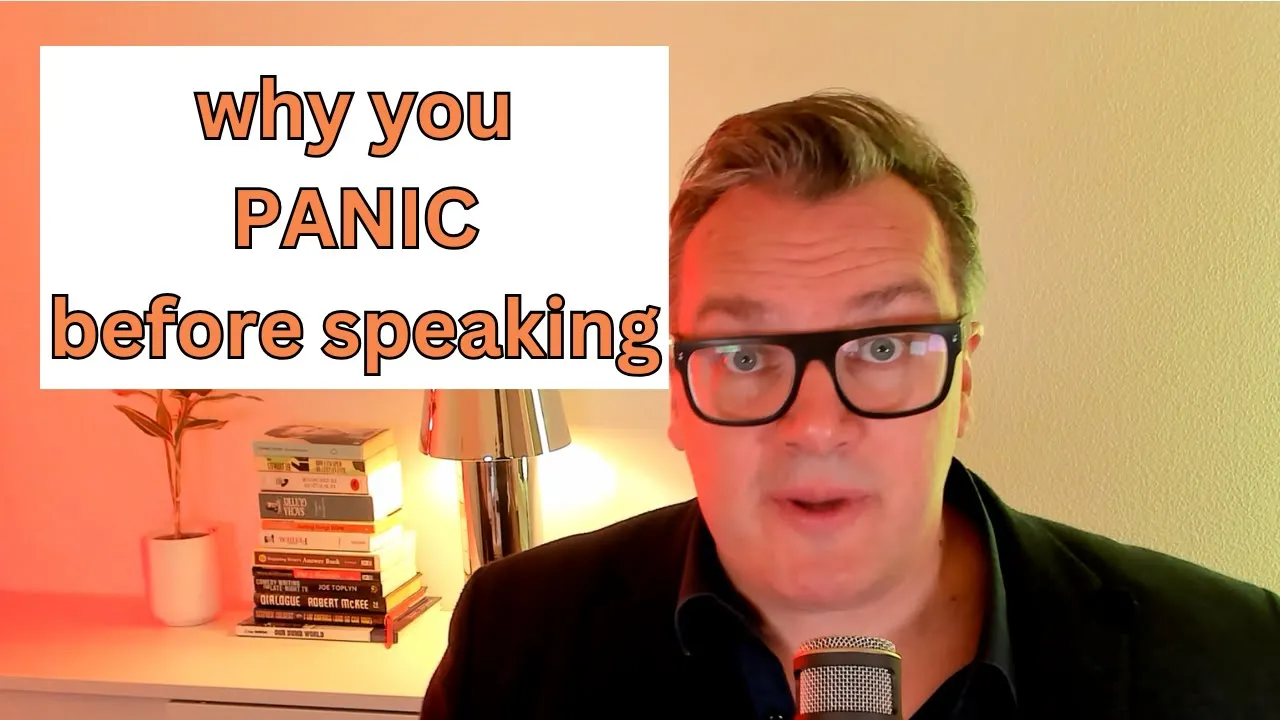
Why You Panic Before Presentations and How Proper Preparation Stops It
I often say that fear might never disappear when you speak in front of people. That part is normal. What can disappear is panic.
I still feel fear every time I step on stage. What I no longer feel is the sense of impending doom. I do not lose my mind anymore. And when I look back at my early experiences of public speaking, that panic usually made sense. Something bad was about to happen, and most of the time, it did. Why does that feeling appear ? Because panic is often the body reacting to a lack of preparation. When you are prepared, fear stays manageable. When you are not, fear turns into panic.
What This Panic Is Really About
Let us put things into perspective. Failing at public speaking is not a life-or-death situation. The worst outcomes are usually:
a bored audience
awkward silence
a feeling of shame
That still hurts. I am not minimizing it. But panic does not come from the possibility of shame. Panic comes from the belief that shame is almost inevitable. And that belief is often accurate.
No amount of deep breathing, positive thinking, visualization, or calming techniques can override one brutal truth your body knows very well: You did not prepare well or enough.
“But I Did Prepare”
This is where many people get confused. You might feel like you prepared because you spent hours thinking about your talk, refining slides, or polishing ideas. But standing backstage, minutes before speaking, your body does not care about effort. It cares about readiness.
And readiness means one thing: You did the work required to deliver the message as a messenger. Your body knows when you skipped that work.
Why People Avoid Preparation
Preparation forces you to mentally step into the situation. You do not need fancy visualization exercises. The moment you say to yourself, “I should rehearse,” your brain already starts simulating the experience. For people who love control, this becomes a nightmare.
Perfectionists, especially those in analytical professions like scientists, engineers, or developers, tend to do this:
imagine every possible scenario
focus heavily on what could go wrong
try to mentally control the uncontrollable
The result is paradoxical. The people who crave control procrastinate the most, because public speaking exposes how much is not controllable.
Some still do work, but they prepare in reaction to imagined disasters instead of preparing for the real task. Once again, the body knows. Right before going on stage, it becomes clear that the preparation missed the point.
What You Actually Need to Prepare
There are two distinct preparations you need to accomplish and confusing them is one of the main causes of panic.
Preparing the message
Training yourself as the messenger
These two phases must be separated by a clear deadline.
This does not mean the message can never change after that deadline. It means the focus of your work must change. If ideas improve organically during phase two, that is fine. What you should not do is stay stuck endlessly polishing the message while neglecting the messenger.
Work With the Time You Have
You do not need hundreds of hours to prepare properly. You need realism. Maybe you have only twenty minutes a day because you have real constraints, a demanding manager or a business to run. That is fine. What matters is how you use that time.
Start by defining your time budget. Then count how many days you have left. Pick a deadline where you switch from message preparation to messenger training. Early on, put that deadline roughly in the middle. Experience will teach you how to adjust it later.
Phase One: Message Mode
When you are working on the message:
focus on producing it
ignore how the audience might react
ignore how you personally feel about it
There is a high chance you will feel dissatisfied. That does not mean the message is bad. Your audience might love it. Production is the priority.
Add elements of storytelling to maximize the chance of emotional impact, which I go over in my trainings.
Once the deadline hits, accept the message as the best version possible within your constraints and move on.
Phase Two: Messenger Mode
Phase two is about familiarity. The single most important task is this: Rehearse your talk out loud, and without notes. (If you use slides, rehearse while clicking through them) If you only do one thing, this is the one thing.
It will feel uncomfortable and cringe. Your brain will tell you this is going to be a disaster. Push through. It only becomes a disaster if you avoid this work.
Once rehearsals are solid, you can add more, depending on your time budget:
getting familiar with the room
testing equipment
meeting the host or MC
working on memorization techniques
All of that is detailed in my workshops, but it comes after rehearsing the talk itself.
Why Panic Disappeared
Today, I still feel fear. I still hear the inner voice telling me it could have been better, that I should have prepared more, that I should have refined my ideas further. Sometimes that voice is right.
The difference is this: I no longer panic. I step on stage and do the best I can with the level of preparation I was able to put in. My body trusts me, because I did the work that mattered. That is the difference preparation makes. Book a call if you want to know about my trainings to help you go next level with your communication skills.
AUTHOR
BENJAMIN DELAHAYE
A former corporate leader turned stand-up comedian, Benjamin spent over 20 years in multinational companies across sales, marketing, finance, and operations, navigating boardrooms and high-stakes presentations. Along the way, he discovered his unexpected superpower: he not only mastered the very things most people dread, he learned to crave them. Public speaking, selling: all became sources of energy, not anxiety.

Keynote speaking training for individuals
Reach next level and become the speaker you crave to be.
See Programs
Public Speaking Coaching for Companies
Empower teams with playful, practical communication training.
See Programs
Want to speak to someone?
Book a Call